
How We Evaluate
We test specs against verified user reviews and real-world performance data for every product we cover. Our picks come down to value, reliability, and what actual users report. No paid placements, ever.
The Problem
Choosing the right air compressor oil can be challenging, especially when considering factors like compatibility, performance, and temperature stability.
Prices and ratings are not available at this time. Click through to Amazon for current pricing.
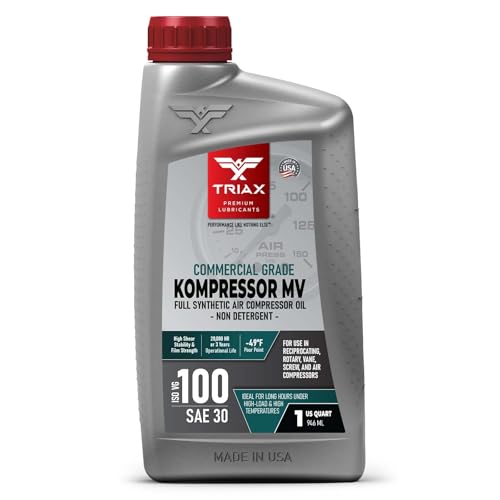
TRIAX Kompressor ISO 100 SAE 30, Full Synthetic, Multi-Vis Air Compressor Oil | for Rotary, Vane, Screw, and Reciprocal | Commercial Grade | High Temp | Non-Detergent (1 Quart)
Best for: Commercial air compressor operators who require consistent performance in high-temperature environments
The TRIAX Kompressor ISO 100 SAE 30 stands out due to its full synthetic formulation that excels in high-temperature environments. Unlike the Milton 1002, which is a conventional oil, this product is designed for a wider range of compressor types, ensuring optimal performance and protection. Compared to Mag 1 69885, which offers only 16 ounces, the TRIAX provides more volume and versatility, making it ideal for serious commercial use.
Pros
- Full synthetic formulation provides enhanced lubrication at high temperatures
- Compatible with rotary, vane, screw, and reciprocal compressors for versatility
- Non-detergent formula minimizes deposit buildup and extends equipment life
Cons
- Available only in 1-quart bottles, which may not be sufficient for large operations
- Higher price point compared to conventional oils
Milton 1002 High Performance Conventional Air Compressor Oil ISO-100-1 Gallon
Best for: Home garage users who operate basic air compressors intermittently
The Milton 1002 offers a substantial 1-gallon volume, making it a practical choice for home users who require routine maintenance for standard air compressors. However, it lacks the thermal protection that the TRIAX Kompressor provides, making it less suitable for demanding environments. While it is more economical than the TRIAX, it may not deliver the same level of performance in high-stress conditions.
Pros
- 1-gallon size offers a larger volume for extended use
- ISO-100 grade suitable for various air compressor applications
- Conventional oil provides good lubrication for standard operations
Cons
- Not suitable for high-temperature applications like synthetic oils
- Less effective in preventing sludge and deposits compared to synthetic options
Mag 1 69885 Air Compressor Oil – 16 Ounces
Best for: DIY enthusiasts with small air compressor needs looking for a budget-friendly option
The Mag 1 69885 is ideal for DIY enthusiasts who need a budget-friendly option for light-duty air compressor use. However, its 16-ounce capacity means users may find themselves running out quickly compared to the larger sizes of the TRIAX and Milton oils. It also lacks the advanced protective properties of the TRIAX, making it less suitable for more demanding tasks.
Pros
- Compact 16-ounce size is perfect for small-scale projects
- Affordable price point allows for easy maintenance without a large commitment
- Basic lubrication suitable for light-duty applications
Cons
- Limited volume may require frequent purchases for regular use
- Only suitable for light-duty applications, not for commercial or high-performance needs
Quick Comparison
| Feature | TRIAX Kompressor ISO 100 SAE 30, Full Synthetic, Multi-Vis Air Compressor Oil | for Rotary, Vane, Screw, and Reciprocal | Commercial Grade | High Temp | Non-Detergent (1 Quart) | Milton 1002 High Performance Conventional Air Compressor Oil ISO-100-1 Gallon | Mag 1 69885 Air Compressor Oil – 16 Ounces |
|---|---|---|---|
| Volume | 1 Quart | 1 Gallon | 16 Ounces |
| Type | Full Synthetic | Conventional | Conventional |
| Compatibility | Rotary, Vane, Screw, Reciprocal | General Compressors | Light-Duty Compressors |
| Temperature Stability | High Temp Performance | Standard Temp | Standard Temp |
Frequently Asked Questions
What is the difference between synthetic and conventional air compressor oil?
Synthetic oils, like TRIAX, offer better performance at high temperatures and are designed to prevent buildup and wear in compressors, whereas conventional oils, like Milton and Mag 1, are suitable for standard use but may not perform as well under stress.
How often should I change my air compressor oil?
It's recommended to change the oil every 500 hours of operation or at least once a year, but this can vary based on usage and the manufacturer's guidelines.
Can I mix synthetic and conventional oils?
It's generally not advised to mix synthetic and conventional oils as it can reduce the effectiveness of the lubrication and lead to potential issues in the compressor.
Disclosure: This article contains affiliate links. If you make a purchase through these links, we may earn a commission at no additional cost to you. We only recommend products we believe will add value to our readers.